Beyond market: A deep dive into Iran’s traditional bazaars
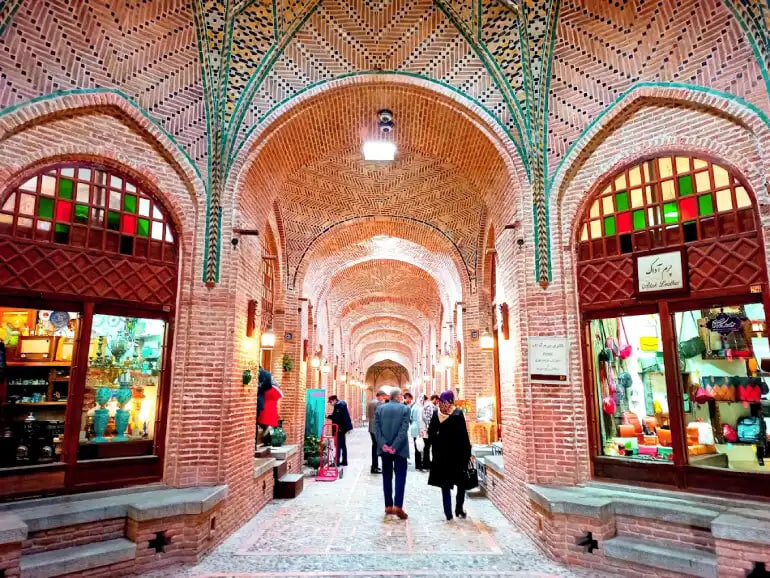
TEHRAN--Step into an Iranian bazaar, and you step into centuries of history and craftsmanship connection. These ancient marketplaces are not just trade centers; they are living museums where art, culture, and everyday life intertwine.
Walking through the bustling alleyways of Iran’s historic bazaars is like stepping into a living tapestry of culture, history, and human connection, Mehr news agency wrote.
These markets, far beyond being mere centers of commerce, serve as vibrant arenas where traditions are preserved, social bonds are strengthened, and stories of generations unfold with every turn. The scent of spices mingles with the aroma of freshly baked bread, the rhythmic sounds of hammers striking copperware resonate alongside the chatter of merchants, and colorful textiles create a visual symphony that captures the eye at every corner.
In the heart of every Iranian city, the bazaar has historically been more than a place to buy or sell goods—it has been the epicenter of community life. Political debates, social gatherings, and the exchange of news once began in these corridors, making them not just economic hubs but also centers of social discourse. The market has long been a mirror of the Iranian society, reflecting the changing tastes, struggles, and triumphs of the people it serves.
Exploring these bazaars offers visitors an intimate view of local life, revealing the artistry, skill, and cultural knowledge embedded in every transaction. From artisans crafting intricate copperware and handwoven carpets to merchants recounting tales of family trade passed down through generations, each experience brings travelers closer to the essence of Iran’s rich heritage. Far from being static relics of the past, these bazaars are living spaces where history and modernity coexist, inviting visitors to immerse themselves in a unique cultural journey.
Here is a look at several prominent historical bazaars in Iran:
Qazvin Traditional Bazaar
The city of Qazvin, a historical hub at the crossroads of Persia, hosts one of Iran’s most magnificent traditional bazaars. Spanning approximately 14 hectares, Qazvin Bazaar has long been more than a commercial center; it is a vibrant social space where communities once gathered to trade, exchange news, and maintain social bonds. The bazaar is a living testament to centuries of Iranian craftsmanship, urban planning, and cultural identity.
The origins of Qazvin Bazaar stretch back at least 1,000 years, with much of its current structure taking shape during the Safavid era. As the city served as the capital of the Safavid dynasty in the early 16th century, the bazaar flourished, connecting Iranian merchants to regional and international trade networks. Its development continued under the Qajar dynasty, with influential figures like Mohammad Bagher Khan Sa'd Ol-Saltaneh shaping its expansion and architectural grandeur. Over time, the bazaar became an indispensable artery for commerce, social interaction, and cultural exchange.
Qazvin Bazaar is renowned for its striking design and structural harmony. Comprising numerous interconnected sections, known as saray and timcheh, the bazaar once housed specialized workshops for metalsmiths, fabric merchants, coppersmiths, and more. There was even a “women’s bazaar” dedicated to female shoppers and women’s products. Today, key sections like Saray-e Sa’d al-Saltaneh, Saray-e Vaziri, and Saray-e Haj-Reza still showcase intricate brickwork, vaulted ceilings, and exquisite tile decorations that reflect the artistry of Iranian architecture.
Visitors walking through the bazaar encounter a sequence of grand courtyards, two-story rooms, and elaborately decorated domes, each area carefully designed to harmonize with its specific commercial purpose. The northern entrance leads to Timcheh-e Sarbaz, the southern entrance to the covered Timcheh, the eastern entrance opens to Saray-e Vazir, and the western gate directs toward the bustling Chaharsough (a Persian term that translates to ‘four markets’). This thoughtful layout demonstrates both functional and aesthetic mastery.
Kashan Bazaar
Kashan Bazaar, with a history spanning over seven centuries, is more than a marketplace—it is a living chronicle of Iranian artistry and urban life. European travelers who visited Iran in past centuries, from Sir Anthony Sherley during the Safavid era to Jean Aubin in the late Qajar period, all marveled at the bazaar’s splendor, often describing it as a highlight of their journeys.
Stretching from Baba Afzal Street to Darvazeh Dolat, Kashan Bazaar historically lay along major trade routes, welcoming caravans from the East and West for hundreds of years. Its origins are traced either to the Buyid period (5th century AH) or the Seljuk era (6th century AH), though earthquakes over the centuries necessitated repeated reconstructions. Safavid rulers, particularly Shah Abbas I, initiated restorations and embellishments to preserve its architectural beauty, while Qajar monarchs, especially under Fathalishah, expanded and adorned the bazaar with exquisite craftsmanship.
Kashan Bazaar was not just a commercial hub—it was also a venue for Safavid royal festivities, often attended by European envoys and travelers. Notable visitors such as Sir Thomas Herbert, Pietro della Valle, and Adam Olearius praised the vibrant atmosphere, intricate trades, and the market’s aesthetic appeal in their travelogues.
Kashan Bazaar comprises multiple specialized areas and caravanserais, including Timcheh-e Bakhshi, Timcheh-e Aminoddole, and the renowned Qeysarieh section founded by Shah Abbas I. Qeysarieh served as a hub for fine craftsmanship, featuring vaulted ceilings, detailed brickwork, and intricate tile decorations—an unmissable highlight for visitors. Other significant sites include the Abdolrazzagh Khan bathhouse from the Zand era and the beautifully adorned Timcheh-e Aminoddole, built during the Qajar period.
Tabriz Bazaar
For over a millennium, Tabriz Bazaar has stood as the economic heart of this historic city. Recognized as the largest covered bazaar in the world, its brick vaults and masterful architecture have earned global admiration. The bazaar is famed for its exquisite Iranian handcrafts, with carpets and textiles that symbolize centuries of local artistry.
Tabriz Bazaar’s origins trace back at least to the 4th century AH, though exact dates are uncertain. Travelers throughout history—from European envoys to traders—have marveled at its grandeur. A devastating earthquake in the late 12th century AH led to extensive reconstruction during the Zand and early Qajar periods. Under Abbas Mirza, the bazaar flourished as a hub for merchants and European diplomats, handling up to a quarter of Iran’s trade at one time.
The bazaar houses approximately 5,500 shops, spanning 40 trades, 35 traditional caravanserais, 20 commercial alleys, and nine schools. Key sections include Amir, Sarajan, and the world-renowned Mozaffarieh Timcheh, famous for Tabriz carpets admired internationally. Amir Timcheh, an octagonal Qajar-era structure with a central courtyard and stone pool, hosts over 100 jewelry shops beneath its grand brick dome.
Tabriz Bazaar is not just a market—it defines the city’s historic fabric. Its linear structure, covered passages, and interconnected caravanserais, bathhouses, and mosques create a cohesive urban space, while its position along the Silk Road historically connected the East and the West. Unique features, such as the Pol-Bazar section spanning the Mehran River, have no parallel elsewhere in Iran. Scholars highlight the bazaar’s architectural harmony, symmetry, spatial organization, and artistic detailing as exemplary of Iranian craftsmanship and urban planning.
Despite modern urban changes, Tabriz Bazaar retains its traditional role, offering a vibrant glimpse into centuries of trade, social life, and artisanal skill. Its unmatched scale, elegant design, and cultural richness make it a pinnacle of Iran’s historic marketplaces.
Leave a Comment